The OpenRuntime for
agents.
Use any harness. Reach any model. Measure every token. Change nothing.
Our pillars
Nasiko controls what your agents cost, touch, and run.
Three questions determine an agent’s production status: spending, access, and execution. Nasiko addresses all from one place, starting with cost, as it’s the first to break.

TokenOps
What did it spend? Forecast a run before it starts, watch it live, and act before a bad run becomes a big bill.
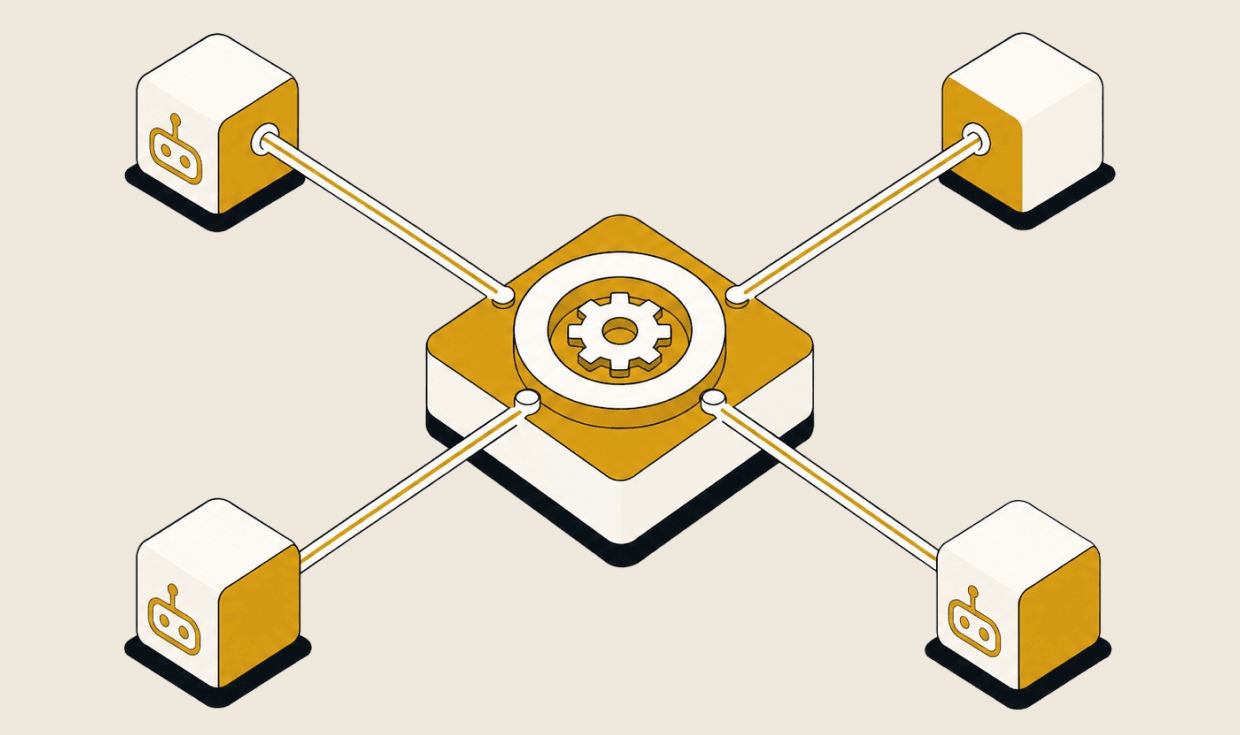
Multi-Agent Harness
Where does it run? Run workflows across the models, frameworks, and providers you already use.

Runtime Controls
What can it touch? Know what every agent can access, and enforce it at the gateway, not in a review meeting.
01 · Inside TokenOps
One system. Three jobs.
Monitor, Optimize, Control: every cost feature is one of the three. A dashboard tells you what happened; TokenOps decides what happens next.
Retry loop ×4 detected
Request halted due to unexpected rise in cost
Monitor
See what a run should cost before it starts, then watch the actual spend the moment it happens: by team, agent, and model, down to a single run. Cost stops being a month-end surprise and becomes an operating metric.
Optimize
Each request routes to the right model at boundaries you set. A small model handles the easy parts; a strong one is called in only where it earns its cost, so the bill drops without the output getting worse.
Control
A risk monitor watches every active run for loops, overruns, and runaway retries. Cross the line you drew, and the controller halts or escalates the run in flight, not after the invoice.
02 · Inside Runtime Controls
Every action checked. Every decision on the record.
Know what every agent is doing, control what it can touch, and prove it afterward. Policy is enforced at the gateway as each call happens, not reconstructed in a postmortem.
See
Every agent mapped to its tools, its data, and its owner. Model and provider allowlists, budget policies, and high-risk workflows, all visible on one dashboard before anything goes wrong.
Enforce
Policy takes effect at the gateway, on the call: guardrails, tool and data restrictions, budget and retry ceilings, approvals for sensitive actions, and a kill switch when an agent has to stop now.
Prove
A complete history of violations, exceptions, and blocks, each explained in plain terms: audit-ready reporting for compliance, risk, and executive review.
Permissions playground
Per agent · per tool- In the agent's tool list
- 2 of 3 tools
- Credentials held by
- the gateway
- Changes take effect
- next call
Stances are enforced twice: once when tools are listed, again when each call lands.
Live: the gateway's per-tool permission model. A blocked tool isn't refused; it was never offered.
03 · Inside the Multi-Agent Harness
Author once. Run anywhere. See everything.
Compose multi-agent workflows across the models, providers, and frameworks you already run. Nasiko coordinates them without replacing any of it: switching providers mid-flow, carrying state across steps, tracing every handoff.
Workflow trace
Customer Onboarding · 5 roles · 3 providers- Forecast
- $0.58
- Actual
- $0.62
- Handoffs traced
- 6 of 6
Author
Compose agents into workflows (roles, tools, memory, and prompts) across frameworks, vendors, and teams. Attach policy and budget at authoring time, and simulate the cost before anything launches.
Execute
One run can span multiple model providers and harnesses. Nasiko coordinates the handoffs: provider switching, fallback routing, and state that survives every step, with cost and policy checked in flight.
Monitor
Harness-level traces of every tool call, retry, loop, and handoff. Find the expensive step, see why a run failed or slowed, and compare what it cost against what it produced.
The platform
One platform under all three.
Every pillar runs on the same ground: a registry that names every agent, a gateway that enforces every decision, and observability that explains every run.
Agentic Registry
Names every agent, its owner, and its version, so cost and traces have something to attach to.
Identity & Access
Every agent mapped to an owner, every permission to a role, with tenant isolation built in.
Gateway & Routing
The controlled entry point. Each request routed to a chosen model; policy takes effect on the next call.
Observability
Full traces: what ran, what it cost, why it retried, and why each model was chosen.
Developer Workflow
CLI, API, SDKs. Agents shippable like software, controlled like infrastructure.
Enterprise Connectivity
Your APIs, MCP servers and model providers, connected, not replaced.
For developers
Built CLI-first.
One command takes an agent from your machine to a running deployment: registered, traced, and on the books, with zero code changes. Nasiko works with the frameworks, MCP servers, and model providers you already use.

$ curl -fsSL https://registry.nasiko.dev/r/nasiko/install-ee | bash
FAQ