Blogs
Nasiko is now available on the DigitalOcean Marketplace
Nasiko
Getting an AI agent to production is one thing. Knowing what it costs, what it can reach, and what it is doing once it is running is another, and that is where most teams lose visibility. Nasiko is an open runtime for your agents: one place to run every agent you deploy and know what is running, what it can reach, and what it costs. Because we run the agents, we know the work. Today we are making that easier than ever to adopt, with Nasiko now available as a one-click offering on the DigitalOcean Marketplace.
Fully managed, from the registry up
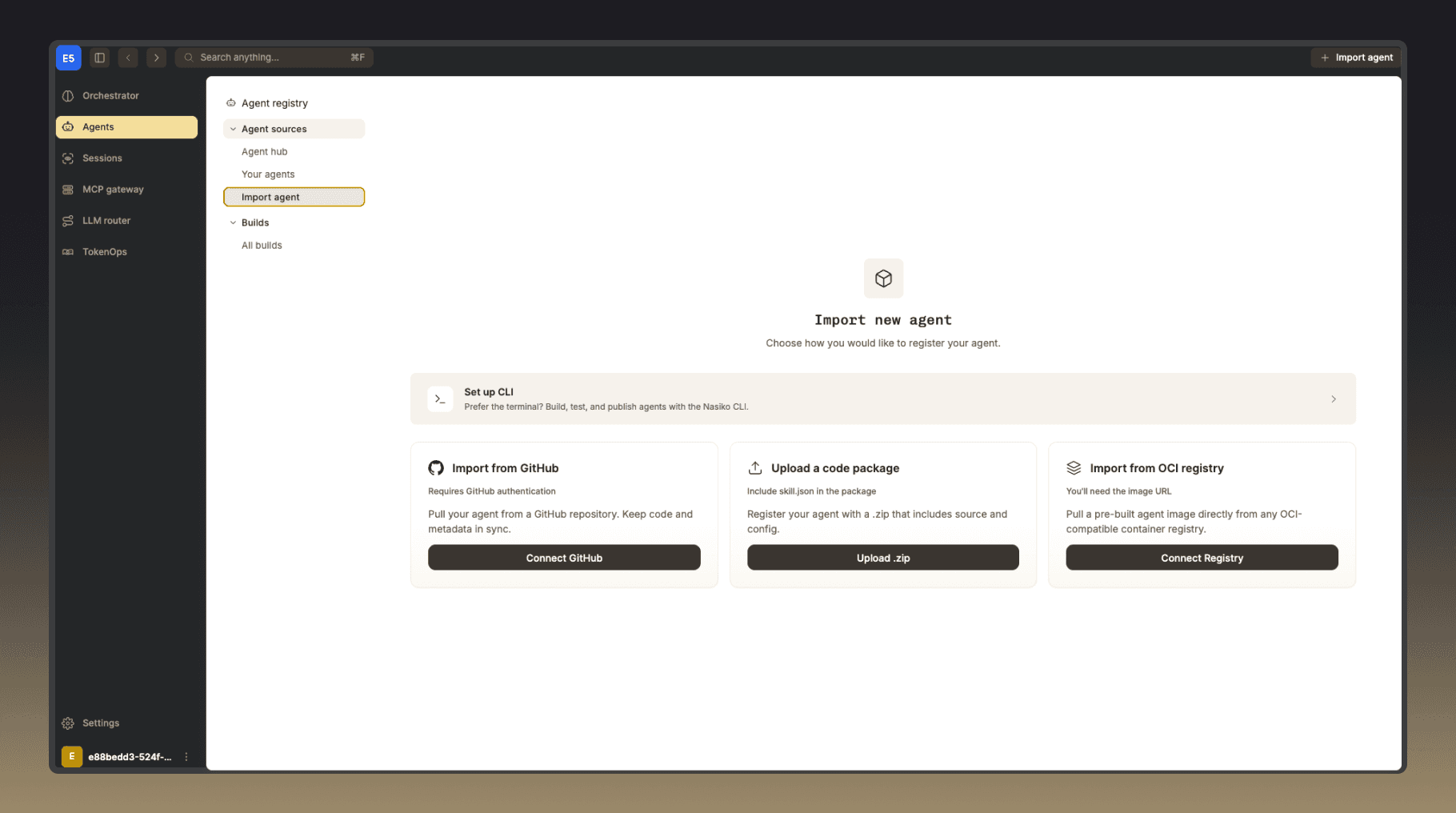
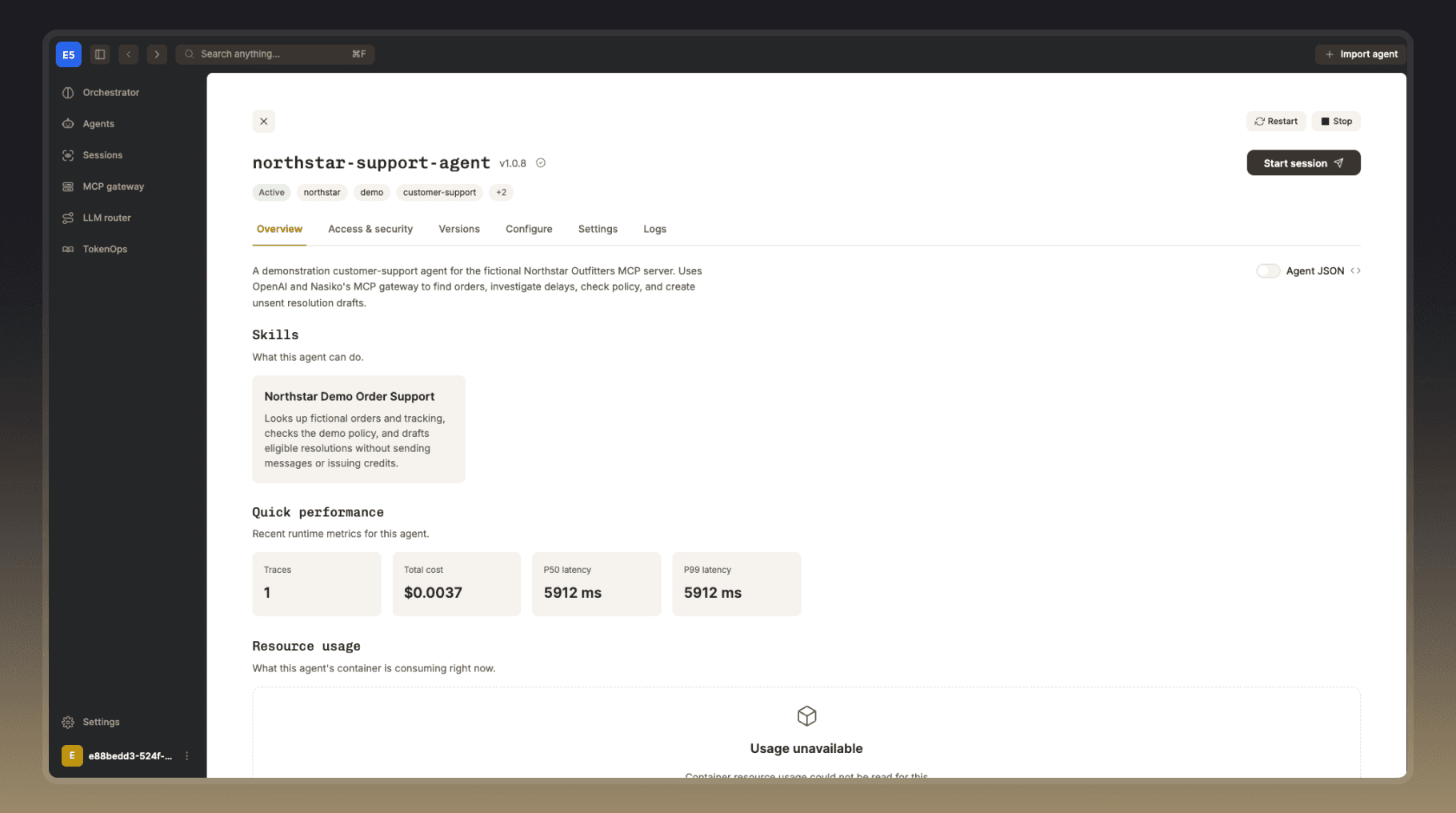
The DigitalOcean offering runs the fully managed Nasiko runtime, so there is nothing to install or operate. Add it from the Marketplace, click through to open Nasiko, and you'll be signed in automatically via DigitalOcean. From there, you upload any working agent, whether it is a containerized service, a LangChain or CrewAI application, or anything that speaks the A2A protocol. Nasiko validates the package, generates its registry metadata and capabilities on upload, and deploys it. You can also compose multi-step workflows for your registered agents directly on the platform. The registry is your intake, and everything past it runs on the open runtime, which we organize around three questions: what the work costs, what it may do, and what it is.
TokenOps: what the work costs
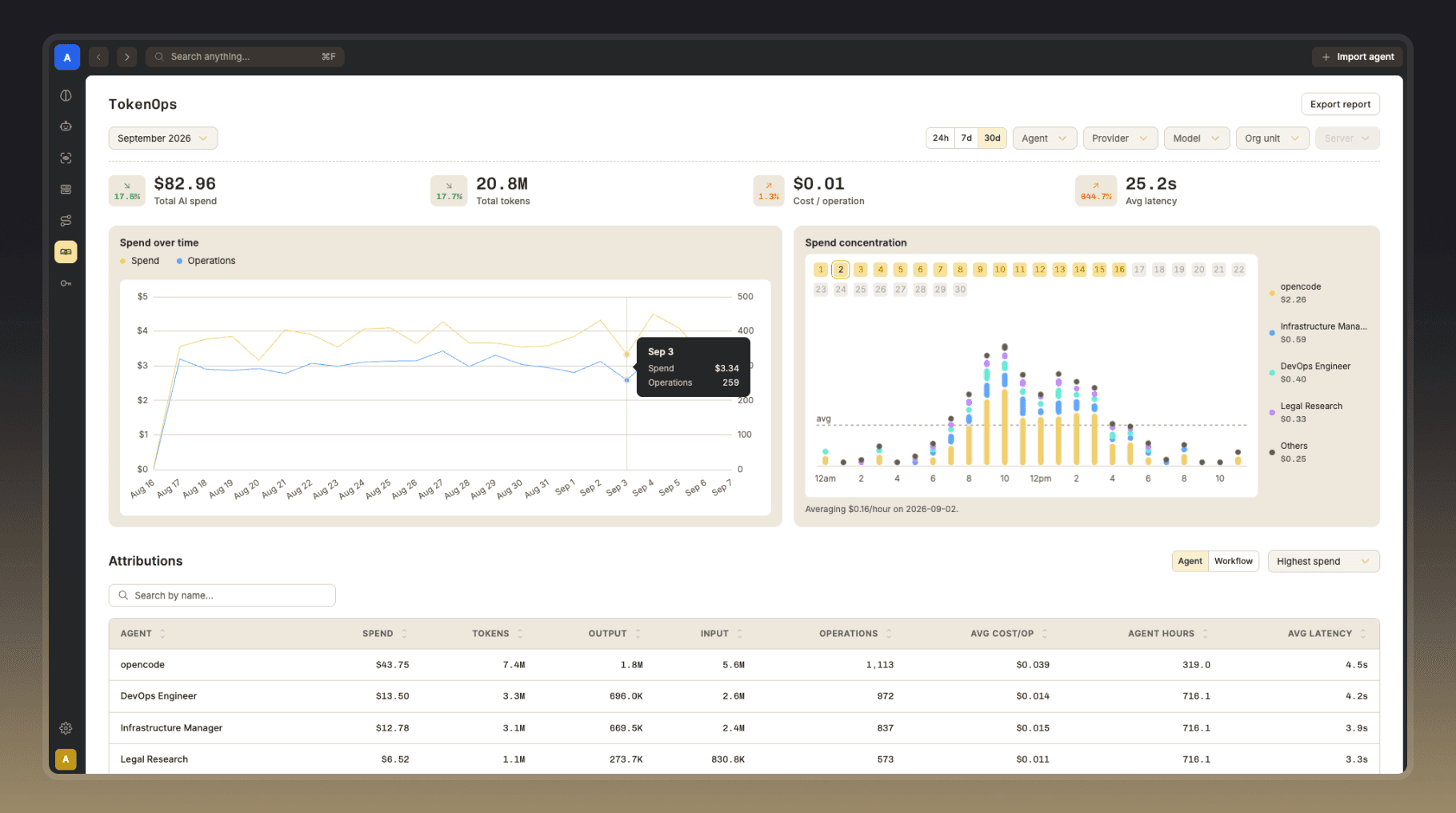
Because Nasiko runs your agents, it sees every model call and the cost of each one. TokenOps gives you visibility into and control over spend across providers, with an LLM router that routes each request to the right model for the job rather than defaulting to the most expensive option. Our own view, and one we have argued at length, is that budget controls should degrade rather than deny: an agent that stays useful within its limits is one teams leave switched on, rather than hard cutoffs that get disabled the first time they break a workflow.
Policy, Security and Governance: what the work may do
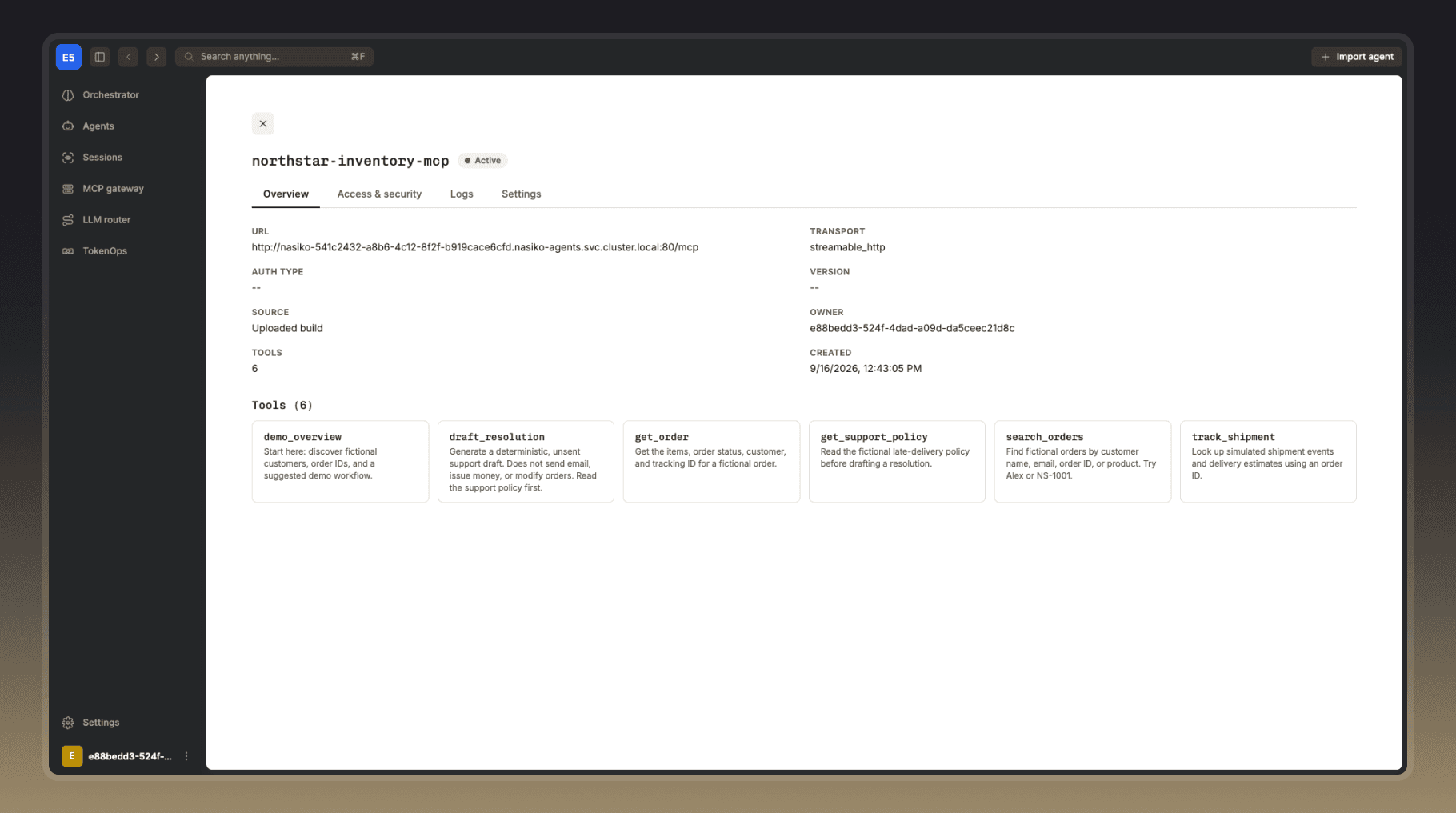
This is where Nasiko governs what your agents are allowed to reach and do. Requests arrive through a single point of ingress with access control in front of them. Secrets are encrypted at rest and injected only at request time, so the agent container never holds a key. And a permission-filtered gateway means an agent sees only the tools and MCP servers you have granted it access to, not everything on the network. Governing behavior is only possible because the work runs where we can see it.
Meta-Harness: what the work is
Some of the most capable agents your team already runs are the coding harnesses developers live with day-to-day, such as Claude Code. They are powerful and largely autonomous, but they usually operate with little visibility into their costs, reach, or behavior. Nasiko gives you that visibility without asking anyone to change their environment or the way they work. Developers keep using the same tools exactly as they do now, and you get insight into agents and harnesses you did not build. This is what open runtime means in practice: it works with the agents your team already uses, not only the ones made for it.
Scaling you do not have to plan for
Nasiko runs whatever you deploy, from long-running agents that stay online around the clock to short-lived agents that burst for an hour and disappear. Scaling is automatic and elastic, adding capacity as your traffic grows and releasing it when load drops. Pricing follows the same shape: a flat monthly subscription with a generous pool of included agent compute, and pay-as-you-go only when you scale beyond it, so your bill tracks what you actually run.
Get started today
Nasiko began as an open-source project and now has a community of more than 2,000 developers on GitHub building agent infrastructure in the open. That same openness runs through the product: an open runtime that meets your agents where they already are and brings them into one managed home. Add Nasiko from the DigitalOcean Marketplace to deploy your first agent, and see the docs at docs.nasiko.com for upload requirements and integration guides.