Blogs
Who's in Charge? The Control Problem in Multi-Agent Systems
Nasiko
A question came up in a review session last quarter that has stayed with us since.
Not "did the system produce the right output?" It had. The question was: "Who approved that?"
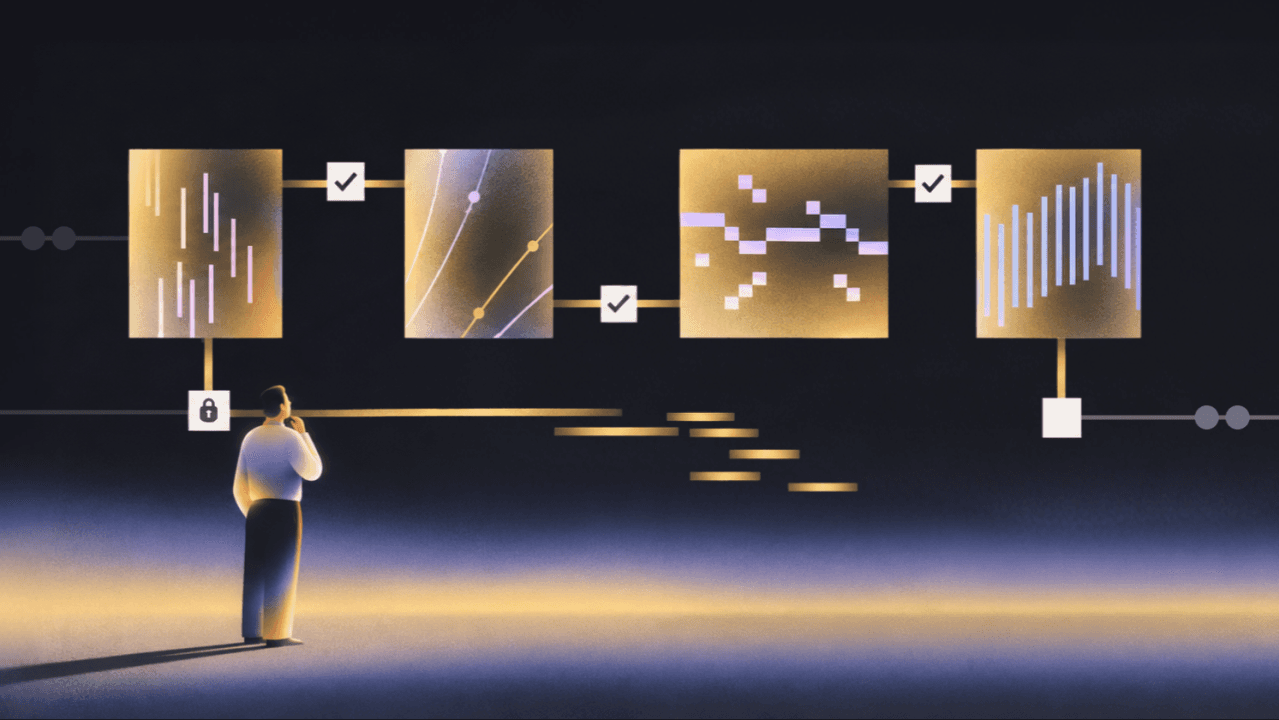
The system had completed a multi-step workflow with researched, synthesised, drafted, and sent a communication without a single human touchpoint. When a researcher asked for the rationale behind one of the decisions, nobody could provide a clear answer. The agents had done their jobs, but the reasoning behind those decisions was no longer visible.
We are building systems that are increasingly capable and increasingly difficult to explain at the same time. The gap between those two things is where the real work is.
The State of Play
Eighteen months ago, Agentic AI was a conference topic. Today it is a production category with real deployments and real consequences when something goes wrong.
LangGraph AI , CrewAI , AutogenAI , and OpenAI 's Agents SDK have made it accessible to build systems where agents delegate and collaborate without a human in the loop for each step. Beneath them, two protocols now dominates how the whole thing holds together: MCP (how an agent connects to tools) and A2A (how one agent speaks to another). Both now sit under the The Linux Foundation 's Agentic AI Foundation, jointly overseen by OpenAI , Anthropic , Google , Microsoft , Amazon Web Services (AWS) , and Block .
The scale of adoption is no longer speculative. J.P. Morgan runs 450 active agentic deployments. Bank of America 's AI assistant reaches over 90 percent of employees. Walmart 's supply chain agents process 500 million data points daily. In healthcare, early deployments report 40 percent improvements in diagnostic accuracy.
In every one of these cases the same question eventually surfaces: when the system acts, can we explain why?
What This Space Is Teaching Us
The teams making the most progress are not the ones who started with the most certainty. They are the ones who built with patience and learned from what broke.
Autonomy is a spectrum, not a switch. Where a system sits on that spectrum should be decided by the consequence and reversibility of the action, not by what the model is capable of. Reading a document can be automated. Executing a financial transaction requires a human.
Coordination requires deliberate design. Assembling agents without defined roles and clear handoff contracts does not produce a multi-agent system. It produces a distributed failure waiting to happen.
Observability has to be built in from the start. Every tool call, reasoning step, and handoff should be logged in a structured way so teams can trace decisions when needed. This is becoming a core requirement, not an add-on.
The organisations that will lead in the agentic era are not the ones with the most capable agents. They are the ones with the most thoughtful control architecture surrounding them.
From the Nasiko Team
At Nasiko we are building from a specific belief: the lasting advantage in multi-agent systems will come from the quality of the control and explanation architecture, not from agent capability alone.
Our work centres on two layers. The automation layer, where autonomy is tiered by consequence, permissions are task-specific, and escalation paths are designed in from the start, not retrofitted after an incident. And the explainability layer, where every agent action produces a structured trace, reasoning is preserved rather than discarded, and the system can give a coherent account of what it did and why.
The design question driving this is straightforward: how do you build a system that knows its own limits?
The most important question in agentic AI right now is not how to make systems more powerful. It is how to make them legible.
More detailed thinking on both layers are coming in the next editions. In the meantime we would like to hear from readers, where is the control problem showing up in your work, and what is actually helping?